


Meet Chippy, my grand-dog.
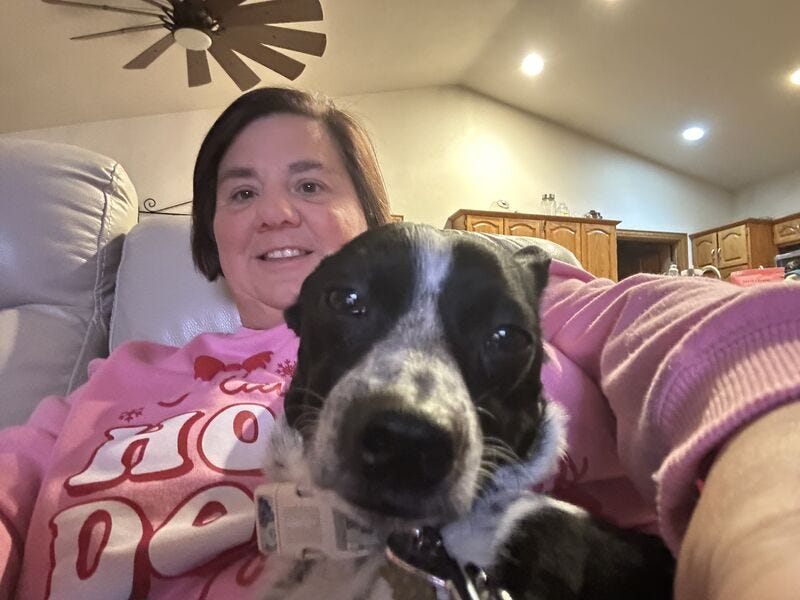
He’s only visited for one week. But somehow, in just a few days, he’s brought more leadership wisdom into my living room than some professional development books manage in a year.
Chippy is a rescue dog, a former shelter pup with a tough past. When he first arrived at my house, he made it very clear he wasn’t sure about me. He growled. A full-on, low, steady, “I don’t know you and I’m not sure I want to” growl.
And honestly? He had every right.
He didn’t know me. He didn’t owe me anything. His past taught him to be cautious, to approach slowly, to protect himself first. His instinct wasn’t about being mean; it was about staying safe.
His trainer had prepped us for this. She said, “Back off. Give him space. Let him decide when he feels comfortable interacting with you.” As much as I knew that was the right thing to do, it went against every part of me.
I’m a connector. I move toward people. I built fast trust. I’m used to bridging gaps quickly. But with Chippy, that wasn’t the assignment.
So, I backed off. I stayed present but didn’t push him. I let him watch me from across the room and keep his distance. I didn’t try to win him over. I let him decide what he needed.
Then, during a wind and snowstorm a few days later, something changed. The same dog who’d growled at me earlier in the week (and still eyed me with suspicion every time I crossed the room) suddenly sprinted across the hardwood floor, leapt into my lap and tucked his shaking body against mine.
No more hesitation and barking, just instinctive trust. He decided I was safe.
It wasn’t about me doing anything to earn it. It wasn’t about persuasion and strategy. It was about presence and staying grounded long enough for him to come to me when he was ready.
Isn’t that exactly what real leadership is?
We talk a lot about building trust in the workplace. About team dynamics, emotional intelligence and psychological safety. But sometimes, we forget that trust doesn’t always look like instant connection or an open conversation.
Sometimes, to build trust, people need to watch you closely to make sure your energy is consistent and you have to patiently prove that you’re safe enough to approach.
Not everyone walks in ready to collaborate or leans in with ideas on the first day. Some people have been burned before. Some have worked in firms or teams where their voices weren’t valued. Some have learned to stay quiet and watch.
Real leadership is about making space for everyone, and it requires having the patience and groundedness to stay steady while they decide.
It’s about showing up with enough presence, consistency and self-regulation that when the storm hits… when the first kicks in or the stakes get high, they choose you.
That’s what Chippy taught me.
What kind of leader are you when the Chippys of the world show up? Do you create a space that makes them feel safe enough to cross the room?
I only got to spend a few short days with Chippy, but the leadership he brought with him is going to stay a lot longer.
And yes, he’s welcome back anytime.